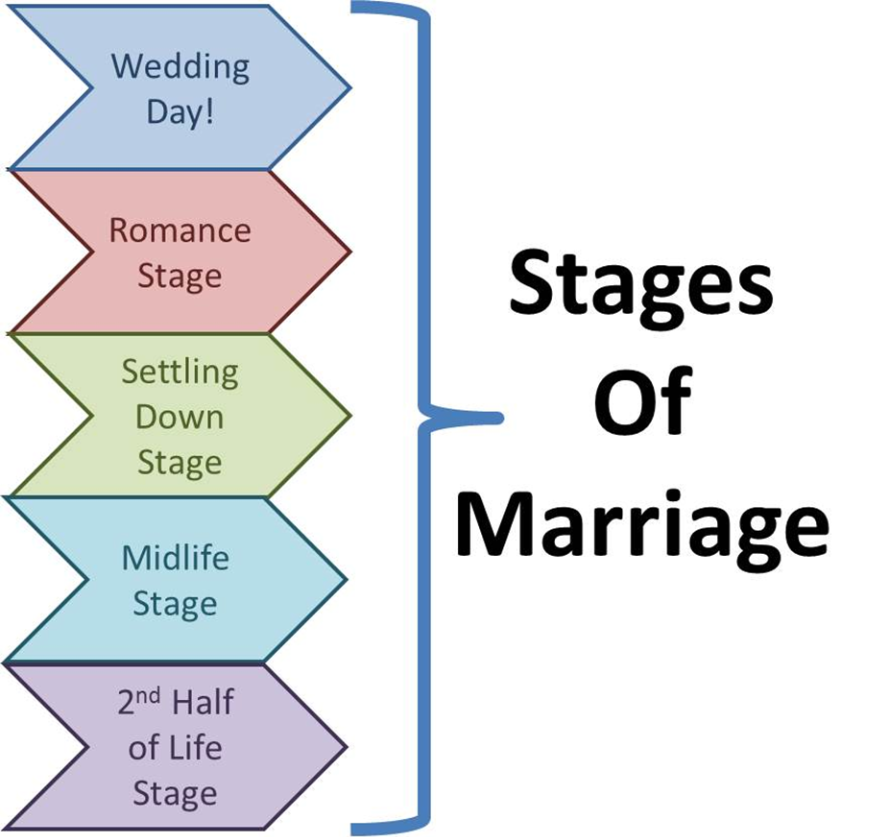
A wedding day is the specific date when a couple legally and ceremonially gets married. It marks the official beginning of their marriage and generally includes a ceremony where vows and rings are exchanged, and in some cultures the mangalsutra is tied, followed by a reception to celebrate with family and friends. [ A mangalsutra is a sacred chain or thread tied by the groom around the bride’s neck during a wedding ceremony. It serves as the primary visual marker of a woman’s marital status and symbolizes the couple’s eternal bond, love, and mutual commitment]
Romance stage is the exhilarating beginning of a relationship driven by a rush of “feel-good.” It is intense and all consuming. Being together feels energizing and effortless. For most couples, this phase lasts between six months and two years. If this stage lasted forever, daily life would become impossible. Moving out of infatuation is not a failure. It is a necessary step toward a deeper and more sustainable connection.
Settling down stage: The high energy and intensity of Romance Stage inevitably give way to the ordinary and routine. Ideally, in this stage couples are expected to learn and deepen their communication skills. They must work to understand and express their wants, needs, and feelings. They are to be honest and vulnerable and to listen actively to each other. They become aware of differences not noticed previously and develop strategies for dealing with them. Couples need to learn about give and take, negotiation and accommodation. There isa lot of discovery about one another. Can we accept each other as real people instead of the idealized versions we met in the Romance stage? Many relationships end here because this stage requires honesty and emotional maturity.
Honesty and emotional maturity are very essential for the settling down stage. They can learn more about each other’s strengths and vulnerabilities. They could identify and talk about their fears instead of acting them out. They should refuse to judge or blame their partner.
In this stage partners see each other in a new light, as gifted and flawed, just as they themselves are gifted and flawed. Empathy and compassion increase. They learn to appreciate and respect each other in new ways; they learn not to take each other for granted. They find a new balance of separateness and togetherness, independence and intimacy. Their thinking becomes more expansive and inclusive. A new hope and energy return to the relationship.
The mid-life stage: Couple in their late 40s and early 50s are married for 20years.The mid-life stage of marriage is a pivotal developmental phase often characterized by shifting roles, empty nests, and career realignments. It is frequently a time of transition where couples must actively rebuild their connection, navigate disillusionment, and redefine their shared goals to prevent growing apart.
As children leave home for college or independence, couples must shift their focus away from constant parenting and rediscover who they are as a duo.
Reassessing career goals, planning for retirement, and taking on caregiving responsibilities for aging parents can completely alter the day-to-day dynamic. These changes can place pressure on a relationship. They can also create opportunities for growth. A long-term study has shown that how a couple treats and supports each other during midlife can affect both partners’ physical and mental health later on. Couples who maintain supportive and stable relationships during these years often experience better well-being as they age.
Second half of life stage: Uncharted Course Ahead where mentors are few and far between. A second-half marriage provides the opportunity to build a closer friendship, to set new goals, to travel and pursue new interests and hobbies, to begin a new profession, to influence your adult children and grandchildren, and to continue to make an impact on this world in one way or another. The second half can be the best time of life! But marriage at this stage comes with challenges. While some couples look forward to the years ahead, others feel trapped. They’re unhappy in a marriage that is less than fulfilling… they wonder if this is all there is. For them, the idea of the second half is quite scary.