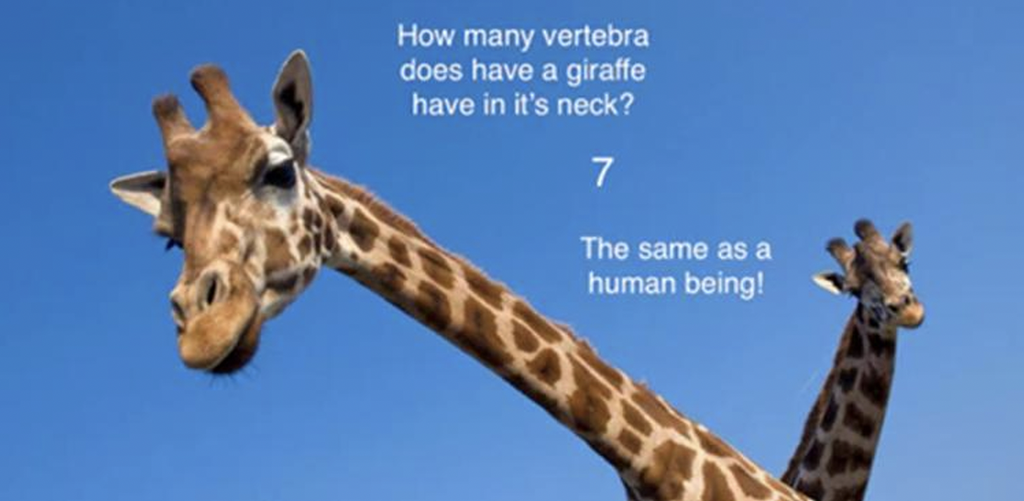
The human neck is an incredible structure! The neck, also known as the cervical spine, is a complex structure that connects the head to the torso. It acts as a vital conduit for the brain to communicate with the rest of the body, provides essential support, flexibility, and protection for vital pathways and allows for a wide range of movements. It starts at the base of the skull and through a series of seven bony blocks called vertebral bodies it attaches to the upper back. The neck is thinner than the head above, and the chest below. This is ideally suited to allow for the flexibility here and also to aid in the position of the head for maximizing the position of our sensory organs like our nose, eyes, ears, and mouth.
The neck consists of seven vertebrae, labelled C1 to C7.
The first vertebra in our neck which is ring-shaped is called the Atlas. It is named after the Greek mythological figure who was burdened with ‘carrying the world on top of his shoulders’ much like the way in which the neck supports and carries the weight of the head.
The head weighs on average between 10 – 13 pounds, so the neck (cervical spine) literally shoulders a big load and allows up-and-down nodding.
C2 (Axis): This vertebra has a unique structure with a peg-like projection called the odontoid process or dens, allowing the head to rotate from side to side.
C3-C7: These intervertebral discs cushion the bones and absorb daily walking impacts, serving as shock absorbers, providing structural support and protecting the spinal cord.
The neck consists of multi-layered tissue structures, including bones, muscles, tendons and cartilage. The neck also includes complex glandular tissue as well as veins and arteries.
The neck muscles are responsible for movement and stability. They can be divided into two groups: superficial and deep muscles. Over 20 specialized muscles coordinate precise movements. Further, fine-tuned muscles constantly micro-adjust to keep your eyes level with the horizon.
Ligaments are strong bands of tissue that connect bones and provide stability to the cervical spine, while shock-absorbing intervertebral discs separate the vertebrae to prevent friction and cushion movement.
The neck contains vital blood vessels that supply the brain and upper body. Vertebral and carotid arteries route through the neck to deliver oxygen- rich blood from the heart to the brain. The jugular veins carry deoxygenated blood back from the brain to the heart.
The cervical spine contains a network of nerves that transmit all motor and sensory signals between the brain and the rest of the body. Several large nerve networks (like the cervical and brachial plexuses) control the muscles and senses in the head, neck, and arms.
Neck is the home of vital organs and glands. Respiratory & Digestive Tracts: The Pharynx (throat) splits into the larynx (voice box) and the trachea (windpipe) for breathing, and the oesophagus for swallowing food. Endocrine Glands: The thyroid gland and parathyroid glands are located in the front of the neck and are responsible for producing hormones that regulate metabolism and calcium levels.
The neck contains a dense network of lymph nodes that filter out bacteria, viruses, and waste products to help the immune system fight infection.
The hyoid bone is a small, U-shaped bone in the anterior neck, situated between the lower jaw and the thyroid cartilage. It is unique as the only “floating bone” in the human body that does not directly articulate with any other bone; it is instead suspended by muscles and ligaments. It serves as a crucial anchor for the tongue and muscles in the throat, which allows humans to speak, breathe, and swallow.
Biologically and structurally, the neck is a critical bridge. If you were to completely lack one, it would lead to several major issues:
Restricted Mobility: Without a functioning neck, we would not be able to turn, tilt, or nod our head. We would have to move our entire upper torso to look around.
Loss of Organ Protection: Without a neck, our oesophagus (food pipe) and trachea (windpipe) the pathways to our lungs and stomach would be dangerously compressed or improperly routed.
Spinal Cord Damage: A heavily compressed cervical area can cause spinal stenosis, putting dangerous pressure on the spinal cord. This can lead to nerve damage, muscle weakness, and balance issues.
Biblical references to the neck generally fall into specific themes:
Stubbornness (Stiff-necked): In Hebrew, an unpliant or rebellious attitude was described as having a stiff or hardened neck. In Exodus 32:9, God describes the Israelites as a “stiff-necked people” because of their resistance to divine guidance.
Servitude and Yokes: Placing a wooden yoke or collar around an animal’s neck was standard for agricultural work. The Bible uses this imagery to denote bondage, submission to God’s will, or subjection to enemies. For instance, in Isaiah 10:27, the prophet speaks of a yoke being removed from the neck.
Triumph and Defeat: Victorious warriors placing their feet on the necks of defeated kings was a physical display of total conquest and submission, such as in Joshua 10:24
Intimacy and Affection: “Falling on the neck” was the standard ancient greeting of deep affection, love, or emotional reunion, such as when Esau and Jacob embrace.
Devotion: In Romans 16:4, the apostle Paul uses a metaphor of risking one’s life, speaking of companions who “laid down their own necks” to save him.
Extreme Evil: In Matthew 18:6, Jesus says that anyone who causes a child to stumble would be better off having a large millstone tied around their neck and being drowned at sea.